0086-18057388688


Cotton Linen Knit Fabric: A Practical Guide to 55/45 Single Jersey for Buyers and Designers
Woven linen has a long reputation for looking good and feeling stiff. Knitting the same fibre with cotton changes that. The result is a fabric that keeps linen's dry, airy hand but gives the stretch and softness people expect from a T-shirt.
The short version
- Best for: warm-weather tops, loungewear, relaxed everyday knitwear and brands that market natural fibres.
- Core spec: 55/45 linen cotton, single jersey, 185 g/m², 138 cm wide, 25S yarn count.
- Main trade-offs: it creases more than polyester blends, it can shrink on the first wash, and texture varies slightly from lot to lot. All three are manageable if you plan for them.
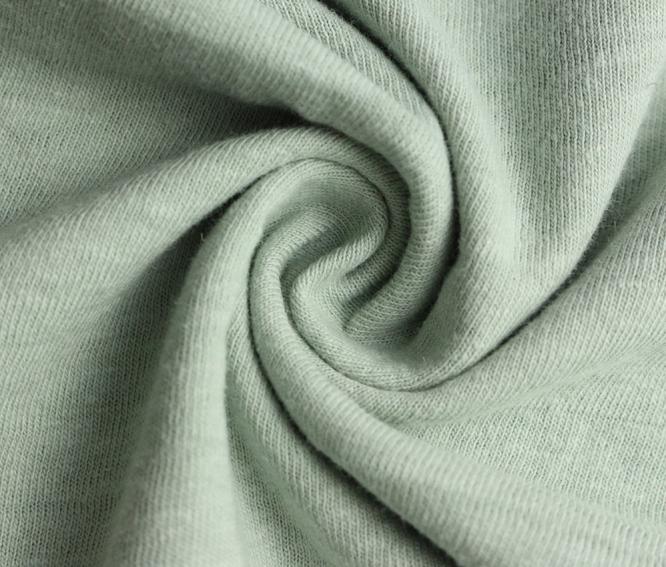
Specifications at a glance
| Item | Detail |
|---|---|
| Item number | DD2007236-3 |
| Composition | 55% linen, 45% cotton |
| Construction | Single jersey |
| Width | 138 cm |
| Weight | 185 g/m² (medium weight) |
| Yarn count | 25S |
| Product page | Cotton linen knit fabric, full details |
Specifications can be adjusted by lot and by finish. Please confirm the current figures with our team before placing an order.
What each fibre contributes
Blends are easier to specify once you know what each fibre does in the finished cloth.
Linen (55%) is a bast fibre from the flax plant. It is relatively stiff and smooth, and it absorbs moisture readily and releases it fast. In a garment this shows up as a dry, cool feel and a slightly irregular, natural surface. Linen is also the reason the fabric creases and the reason it keeps its strength through repeated washing.
Cotton (45%) is shorter, softer and more elastic. It rounds off linen's crispness and makes the fabric comfortable against the skin straight away. It also makes the yarn easier to knit evenly.
The 55/45 ratio leans slightly toward linen. If your priority is a pronounced linen character, with a drier hand and more visible texture, this ratio delivers it. If you want a much softer, more cotton-like feel, a blend with a higher cotton share, such as the 80/20 cotton linen terry in our range, is the better direction.
One point deserves precision. Linen and cotton are both absorbent, and linen releases moisture faster than cotton does. That makes this blend comfortable in heat. It is not a performance wicking fabric in the way engineered synthetics are, and it should not be marketed as one.
What single jersey means for production
Single jersey is the simplest weft-knit structure: one set of needles producing a smooth face and a slightly textured back. It is light, stretchy and economical, and it has some well-known habits that affect your cutting room.
- Edge curl. Cut edges roll toward the face side. Plan for this when laying up and sewing. Fusible tape or a gentle spray of starch on the cut edge makes handling much easier.
- Relaxation. Knitted fabric is held under tension during manufacture. Let rolls rest, and relax the lay before cutting, so panels do not change size after sewing.
- Spirality (twist). Single jersey can twist slightly, so side seams drift on a washed garment. Ask for twist results on the lot you are buying and set a limit in your specification.
- Sewing. Use a ballpoint or stretch needle, a stretch-capable stitch, and stabilize shoulder seams with clear elastic or tape so the neckline holds its shape.
Reading the numbers: 185 g/m² and 25S
185 g/m² sits in the medium range for jersey. It is heavy enough to look opaque and hang well in light colours, and light enough to stay breathable in summer. This is why it works across seasons in layered looks rather than only in hot weather.
25S refers to the yarn count. A higher number means a finer yarn, so 25S is finer than the 21S counts common in basic knit fabrics. Finer yarn gives a smoother, more refined surface at the same weight.
A quick costing example (illustrative, not a guarantee). If a T-shirt pattern, including a cutting allowance, uses about 1.1 m² of fabric, the fabric weight per garment is roughly 1.1 × 185 g, or about 204 g. At 138 cm wide, that is about 0.8 m of length. Use your own marker efficiency for real numbers. It also helps to ask whether the 138 cm is the full width or the usable cuttable width, since selvedge and edge loss affect yield.
How it compares with other fabrics in our range
If you are not yet sure that 55/45 single jersey is the right base, the table below sets it beside related fabrics we currently list. Each name links to its product page.
| Fabric | Composition | Width (cm) | Weight (g/m²) | Count |
|---|---|---|---|---|
| DD2007236-3 (this fabric) | 55/45 linen cotton single jersey | 138 | 185 | 25S |
| DD1703256 | 50/50 linen cotton printed jersey | 120 | 125 | 35S |
| DD2007063 | 50/30/20 Sustans linen cotton jersey | 160 | 215 | 25S |
| DD2305037-2 | 80/20 cotton linen terry | 175 | 130 | 30S |
| ID2209153-2 | 70/30 modal linen single jersey | 160 | 180 | 25S |
| GD2211104-1 | 55/45 linen viscose single jersey | 145 | 180 | 25S |
| DD1905189-2 | 100% linen single jersey | 150 | 150 | 30N |
Figures are taken from the product listings on our site. See the full linen, hemp and blends category for more options.
How to read the table. Choose the 100% linen jersey for the driest, most textured hand. Choose a linen viscose or modal linen blend when you want a smoother, more fluid drape. Choose the 55/45 cotton blend when you want linen character without giving up everyday softness and a friendly price-to-comfort balance. For heavier, structured pieces, the 215 g/m² blend is the stronger candidate.
Where this fabric works best
- T-shirts and tops. The weight gives a clean drape without clinging. Pre-wash a sample to confirm your fit allowances.
- Loungewear and sleepwear. Breathability and a soft hand matter most here, and a relaxed, slightly creased look is part of the appeal.
- Light sweaters and layering pieces. At 185 g/m², it works as a cardigan or overshirt layer in spring and early autumn.
- Brands built on natural materials. Both fibres are plant-based and biodegradable, which supports honest sustainability messaging as long as dyes and finishes are also considered.
It is a weaker choice for garments that must stay sharply pressed, such as tailored shirts and formal wear, and for performance sportswear that needs fast drying and high stretch recovery.
Quality control: what to ask for
Natural-fibre blends reward buyers who write a clear specification. Our production capability page describes full inspection of greige fabric, inspection of the finished product, and in-house testing equipment, including pilling and rubbing testers. For any lot, it is reasonable to ask for results against recognised methods. The most useful ones are listed below.
| Property | Common test method | Why it matters for this fabric |
|---|---|---|
| Dimensional change after washing | ISO 6330 (washing procedure) with ISO 5077 (measurement) | Natural fibres shrink; this sets realistic pattern allowances. |
| Pilling resistance | ISO 12945-2 (Martindale) | Jersey surfaces show wear first; useful for repeat-wear garments. |
| Colour fastness to washing and rubbing | ISO 105-C06 and ISO 105-X12 | Dark shades on linen blends can crock if dyeing is not well controlled. |
| Spirality after washing | Per your customer or brand standard | Prevents twisted side seams on single jersey. |
Method numbers are listed so you can reference them in a purchase order. Your own brand standard may call for different limits.
Care, and the three issues buyers ask about most
Washing and drying. Machine wash on a gentle cycle in cold or lukewarm water with a mild detergent and no bleach. Dry flat or on a line. Avoid high heat.
Shrinkage. Expect a small change after the first wash, because natural fibres relax. The practical answer is to wash a swatch before cutting, measure it, and build the result into your pattern. Tumble drying makes it worse, so put a clear care label on the garment.
Wrinkling. Linen creases, and the knit structure recovers better than a woven cloth would, but you will still see soft creasing. If a smoother look is required, steam or iron at medium heat. Many brands simply present the creasing as part of the fabric's character.
Texture variation. Linen yarn has natural slubs and thickness variation. Small differences between lots are normal. To keep a collection consistent, order enough fabric for one style from a single lot and approve a physical standard sample.
About the mill behind the fabric
Zhejiang Guocheng Linen Knitting Co., Ltd is based in Tongxiang City, Zhejiang Province. According to our company profile, the site covers 34,000 square meters, employs about 150 people, and has an annual capacity of around 5,000 tons. Roughly 70% of finished products are exported to Europe and America. The company focuses on linen and linen-blend knitted fabrics, and lists GOTS, OCS, GRS, RWS and OEKO-TEX 100 certificates.
A word on certifications. A certificate held by a mill does not automatically cover every fabric it sells. If you need a certified claim on a finished garment, ask which specific article and lot the certificate scope covers, and ask for the relevant documents. You can read each standard's requirements at the issuing bodies: OEKO-TEX, Global Organic Textile Standard and Textile Exchange (OCS, GRS and RWS).
Before you request a sample: a short checklist
- Target garment type and the weight range you can accept.
- Colour, with a physical reference or a Pantone code if available.
- Whether the 138 cm width is the usable cutting width for your marker.
- Shrinkage and twist limits you require after washing.
- Any certification you need to claim, and the documents you will ask for.
- Estimated quantity, so we can advise on lot planning and lead time.
Frequently asked questions
Is cotton linen knit fabric warm or cool?
It feels cool and dry in warm conditions because both fibres absorb moisture and linen releases it quickly. At 185 g/m², it also layers well in cooler weather.
Does it stretch like a regular cotton jersey?
It has the natural give of a knitted structure, but linen is less elastic than cotton, so expect somewhat less recovery than a pure cotton jersey. For close-fitting styles, ask about adding elastane in a custom development.
Will it feel scratchy?
The cotton share and the fine 25S yarn keep the hand soft. Linen fabrics also tend to soften with washing.
Can the fabric be customised?
Our product page notes that bulk orders and custom specifications are available. Contact the team with your target composition, weight and colour.